
Recently, I was at a gathering where each of us was asked to share a story of hope. For many that might come across as a bit odd. But, as a Christian minister in Long Beach, California, it’s actually something that I get asked quite a lot these days. Typically, the “hope question” gets posed after a comment about the latest federal government outrageous headline or reversal of course. To be clear, I spend much of my days hearing any number of stories, opinions and reflections on the current status of division in which our country finds itself. I hear an ongoing stream of diverse views and perspectives from conservatives, liberals, and moderates.
Interestingly enough, one thing does bring a majority of these voices together. Seemingly and sadly, one thing that our widely diverse community shares is an immense amount of anxiety and fear. Across the political-partied aisle, there is a strong sense of apprehension about where our country is headed. There is a lot of description of a fast and slippery slope of moral decline. I would share that there is an increasingly strong feeling of hopelessness rising amongst the people that I serve.
So, in that context and in my role, it makes good sense for people to ask me for a story of hope. As a minister, I am expected to have wisdom to offer in difficult situations as well as vision for a hopeful future. In the church, we are a mere few days from Easter, when we pull out all the stops to celebrate the biggest, most fabulous day in the Christian calendar. For some, Easter is a day full of chocolate bunnies, pastel dresses, and fancy hats. For some, it’s a day for a big ham dinner and gathering around the table. For some, it’s a morning of lilies, music and thunderous preaching – all to celebrate the biggest miracle in the Christian story.
However, none of these names the biggest, most universal way to celebrate the Easter holiday: the Easter Egg Hunt! Prior to Easter Sunday, folks hard-boil and color eggs in multiple colors of vinegar dye. Then, eggs get hidden all over yards and parks for children to find. Admittedly, it’s an odd undertaking when one steps back to think about it, but even so, it’s a longtime and beloved annual tradition. As odd as it may be, the boiling, dyeing, hiding and finding of Easter eggs marks the celebration of the biggest miracle in the Bible. Additionally, throughout our secular communities, Easter Egg Hunts are valuable markers of the onset of spring. And in all of that, these egg hunts serve as a sign of hope that the spring season often brings.
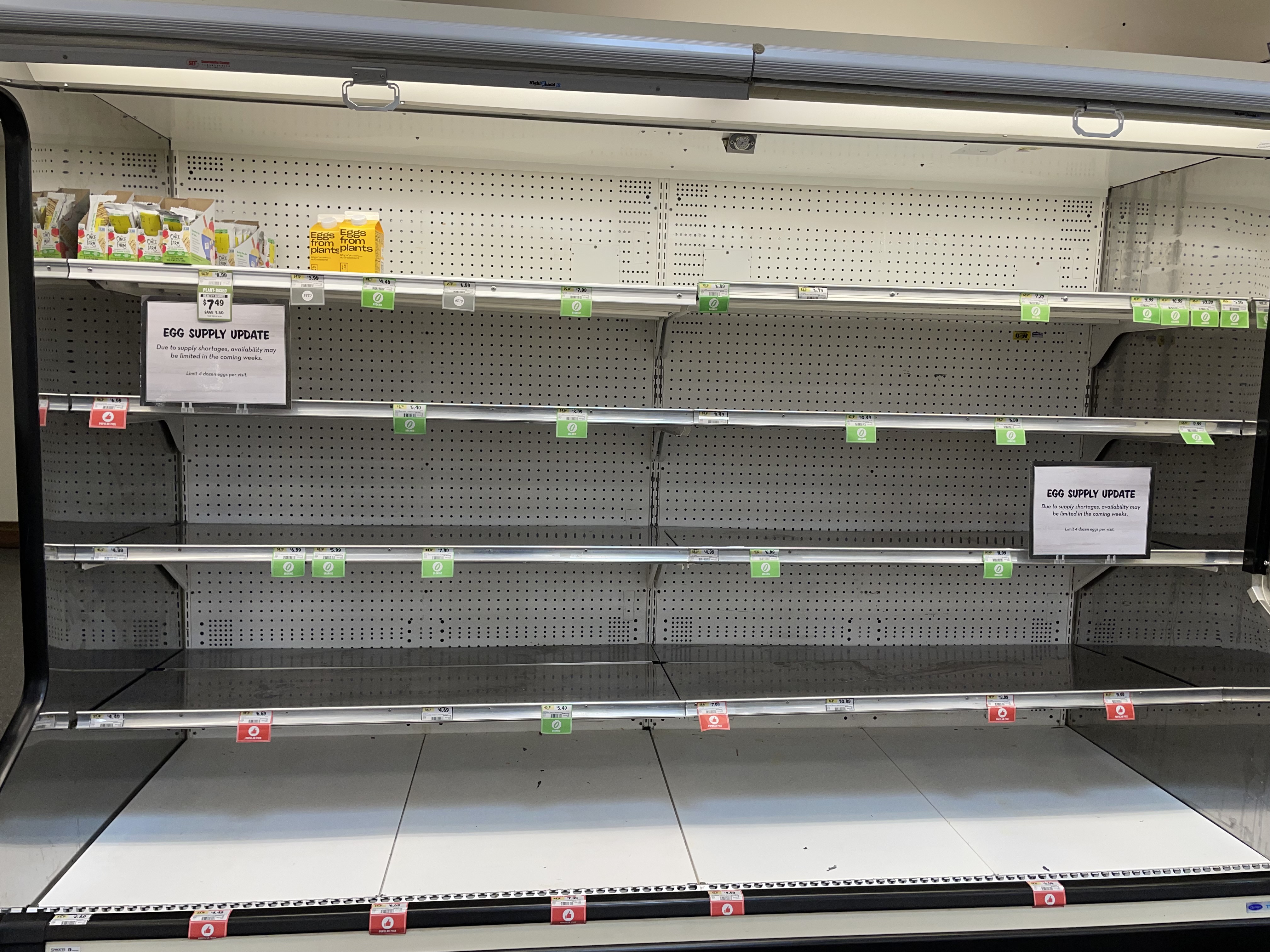
But when I went to the grocery store this week, I encountered a problem for this year’s sign of Easter hope: not a single egg for sale. The refrigerated egg case at my local grocery store was depleted, and a sign read: “due to supply shortages, availability may be limited in the coming weeks.” I stood there and chuckled to myself, “well now, how are we ever going to celebrate Easter?”
Of course, Christians know that Easter is as much about dyed eggs as Christmas is about wrapped presents under the tree. Egg hunts and Christmas gifts are symbols that help us to narrate and live out the ancient stories of our faith. But, as I thought about upcoming Easter celebrations and the hindrance of the egg shortage, I realized that there are other parts of the story that offer me hope at this particular crossroads in our culture, communities and country.
This year, my story of hope isn’t the one with the big names, or the one that gets all the attention.
Instead, my story of hope is from a time when Jesus ate dinner with his closest friends. The dinner occurred just a few days prior to his death. Some refer to the evening as the “Last Supper,” and there has been no shortage of acclaimed artwork depicting the event. But it’s not the artistic symmetry of the meal or the grouping of Biblical heroes surrounding Jesus in his final hours that brings me hope. It’s simply the knowledge that in his final hours, Jesus spent time with people. He did what brought him comfort and what he loved the most: gathering friends and enjoying a meal. He continued to build relationships, and it’s there that I am finding hope. This season, it won’t be centered in Easter egg hunts or Sunday worship brass ensembles. It won’t be coming from the news headlines where big, bold political moves claim to right all of the wrongs.
My hope is coming from the people with which I find myself on a daily basis.
In a time and place where there is such deep division, I am directing people to seek hope and change in one another. I am encouraging people to seek out their immediate community and be bold enough to build a bridge or two. So that maybe next year, with the bridges that we have built, we can cross the vast chasm that seems to divide us so starkly today?
~ Pastor Melinda

 pastorchixsta