we’ve been here before.

Desire first and foremost God’s kingdom and God’s righteousness

~ Matthew 6: 33a

We’ve been through deeply hard things. 

You, me and countless followers of Christ, we’ve been here before.

Regardless of its familiarity though, never in my lifetime did I imagine leading a community in the divisive and often cruel political environment in which we find ourselves today.  But, here I am and here we are, and, sadly enough, we have all been here before. Any world history book recounts those details, including the oppressive regime under which Jesus and his early followers lived.

Unfortunately though while we’ve been here before, familiarity isn’t really much comfort. Our times leave me speechless and demoralized more often than not. And, I long deeply for clear answers that can nullify the current challenges.

But? I don’t have any Pro-Tips or Life Hacks for us. I sure wish I did.  

Sometimes… actually … a lot of time, I wish that I professed a faith that had clear, go-to answers. But, I am pretty sure that if my faith had easy, straightforward answers to the incredibly complex and contextual challenges of life today:

  1. I’d be a lot richer. 😎
  2. I’d have a phenomenally larger social media presence. 🤣
  3. My faith simply wouldn’t reflect the life of Jesus and the early church. ✅

The reality is that the more I pastor, the less clear I am about the faith practice of following Jesus;  the more questions I have; and the more I wrestle internally before providing any answers.

Reassuring, right?

But, in the same breath, I will say also that the more I pastor, the more clarity I have that our God is big enough for all of my and your lack of clarity as well as our doubts, challenges, sorrow, struggles, worry, anger and frustration.  

And, in that same breath, I will say also that the more I pastor the more I experience that when I follow the way of Jesus >> I mean really follow the way of Jesus >> the more peace I have in times such as these.

It isn’t a peace that will solve all of the problems.

It is a peace that gets me to another day and helps me feel not so dang alone along the way.  Sometimes, I think that was exactly Jesus’ point.

Get me to another day and help me not feel so alone along the way.

Jesus didn’t give us strict rules and religious laws to follow.  In fact, he spent much of his time teaching how religious laws can result in the exact opposite of what God desires. Jesus taught us to follow and share the ever-expanding and evolving expanse of God’s love and grace. And, when we focus on God and doing the sharing, no one and no thing can strip us of that exact love and grace that God showers upon us.

That brings a kind of peace that can fill us head to toe (if we allow it). 

Enough peace to fill us for another day.

As we continue in these difficult and confusing times, I am going to suggest that we focus on God and do the work of “desir[ing] first and foremost God’s kingdom and God’s righteousness,” (Matthew 6: 33a) in three specific ways. 

1. EXPERIENCE JOY

No matter what is happening all around us – and it’s a lot if you are paying attention (and I get it if you aren’t too – there is time for both), God wants us to experience JOY. Recently, in his weekly newsletter Into the Gray, the Rev. Benjamin Cremer wrote a beautiful piece, “Caring in a Cruel World” that I highly recommend. Reflecting on joy, he shared:

“However you find it, humor and joy can unmask the absurdity of oppression and arrogance of our time. Joy is not escape, it brings depth, it brings healing, and it is resistance. So laugh with friends. Celebrate life. Double down on joy, because joy restores strength (Nehemiah 8:10).”
~ Rev. Benjamin Cremer

https://benjamin-cremer.kit.com/posts/caring-in-a-cruel-world

2. SHOW UP IN COMMUNITY

Show up with your people (family, friends, faith community, and/or peers). Find joy together and rest. Comfort one another and heal. Laugh out loud at the water station or on the soccer field or gym. Sing loudly in the car or at a communal worship service. Cry aloud or march in the streets.

Readers, dinner church attendees, friends, family, Long Beach church, yoga practitioners, hockey parents, orchestra boosters, all of you – you are my community; my tribe.  My deepest hope is that we are and can continue to be each others’ community now and in the days ahead. Now more than ever.

3.  LET GO OF GUILT AND SHAME.

Photo by Beyzaa Yurtkuran on Pexels.com

While we experience JOY,

While we seek and find COMMUNITY, 

…  we must also work to let go of any guilt or shame that may get piled onto it.  

God needs you and I to experience JOY whenever we can – especially now – so that we can help the world when we are ready and needed.  

We must not let the power of guilt and shame strip away what God needs us to do.  

— Our joy gives us the capacity to be healing agents; to do what is needed when times get tough.

— Our Joy gives us the strength to put the one foot in front of the other when that is all we got.

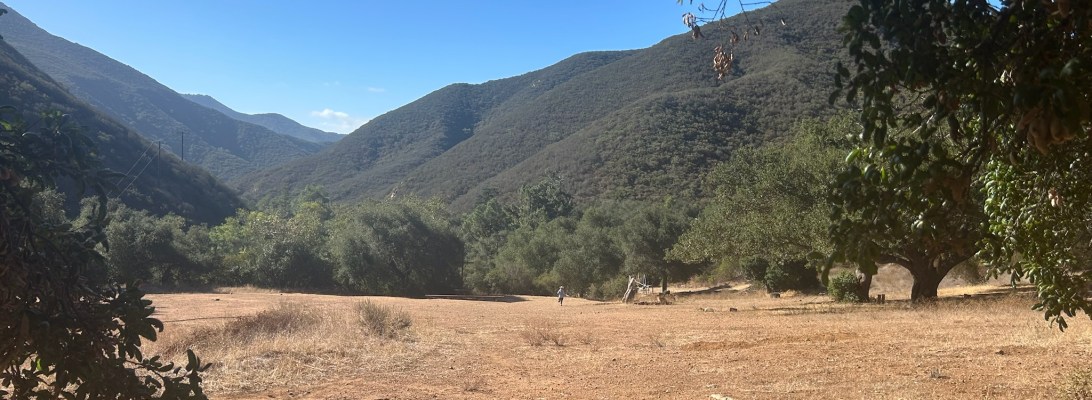
God needs you and I to spend weekends in nature together … to be community … to laugh out loud >> do silly things >> love one another >> experience JOY whenever we can and however we can.

So church, as I reflect on the teachings of Jesus and in my struggles as a faith leader today, here is how I am seeking to remain sensitive and caring and even painfully aware … in these times:

  • Experience JOY.
  • Show up in COMMUNITY.
  • Let go of guilt and shame.

I trust that this how we work together to “desire first and foremost God’s kingdom and God’s righteousness,” and what Jesus taught us in the Gospel of Matthew, chapter six.

May it be our way.

easter hope with no eggs?

Recently, I was at a gathering where each of us was asked to share a story of hope.  For many that might come across as a bit odd.  But, as a Christian minister in Long Beach, California, it’s actually something that I get asked quite a lot these days. Typically, the “hope question” gets posed after a comment about the latest federal government outrageous headline or reversal of course.  To be clear, I spend much of my days hearing any number of stories, opinions and reflections on the current status of division in which our country finds itself.  I hear an ongoing stream of diverse views and perspectives from conservatives, liberals, and moderates.

Interestingly enough, one thing does bring a majority of these voices together.  Seemingly and sadly, one thing that our widely diverse community shares is an immense amount of anxiety and fear.  Across the political-partied aisle, there is a strong sense of apprehension about where our country is headed.  There is a lot of description of a fast and slippery slope of moral decline.  I would share that there is an increasingly strong feeling of hopelessness rising amongst the people that I serve.

So, in that context and in my role, it makes good sense for people to ask me for a story of hope.  As a minister, I am expected to have wisdom to offer in difficult situations as well as vision for a hopeful future.  In the church, we are a mere few days from Easter, when we pull out all the stops to celebrate the biggest, most fabulous day in the Christian calendar.  For some, Easter is a day full of chocolate bunnies, pastel dresses, and fancy hats.  For some, it’s a day for a big ham dinner and gathering around the table.  For some, it’s a morning of lilies, music and thunderous preaching – all to celebrate the biggest miracle in the Christian story.

However, none of these names the biggest, most universal way to celebrate the Easter holiday: the Easter Egg Hunt!  Prior to Easter Sunday, folks hard-boil and color eggs in multiple colors of vinegar dye.  Then, eggs get hidden all over yards and parks for children to find.  Admittedly, it’s an odd undertaking when one steps back to think about it, but even so, it’s a longtime and beloved annual tradition.  As odd as it may be, the boiling, dyeing, hiding and finding of Easter eggs marks the celebration of the biggest miracle in the Bible.  Additionally, throughout our secular communities, Easter Egg Hunts are valuable markers of the onset of spring. And in all of that, these egg hunts serve as a sign of hope that the spring season often brings. 

But when I went to the grocery store this week, I encountered a problem for this year’s sign of Easter hope: not a single egg for sale.  The refrigerated egg case at my local grocery store was depleted, and a sign read: “due to supply shortages, availability may be limited in the coming weeks.”  I stood there and chuckled to myself, “well now, how are we ever going to celebrate Easter?” 

Of course, Christians know that Easter is as much about dyed eggs as Christmas is about wrapped presents under the tree. Egg hunts and Christmas gifts are symbols that help us to narrate and live out the ancient stories of our faith.  But, as I thought about upcoming Easter celebrations and the hindrance of the egg shortage, I realized that there are other parts of the story that offer me hope at this particular crossroads in our culture, communities and country.  

This year, my story of hope isn’t the one with the big names, or the one that gets all the attention.   

Instead, my story of hope is from a time when Jesus ate dinner with his closest friends.  The dinner occurred just a few days prior to his death.  Some refer to the evening as the “Last Supper,” and there has been no shortage of acclaimed artwork depicting the event.  But it’s not the artistic symmetry of the meal or the grouping of Biblical heroes surrounding Jesus in his final hours that brings me hope.  It’s simply the knowledge that in his final hours, Jesus spent time with people.  He did what brought him comfort and what he loved the most: gathering friends and enjoying a meal.  He continued to build relationships, and it’s there that I am finding hope. This season, it won’t be centered in Easter egg hunts or Sunday worship brass ensembles. It won’t be coming from the news headlines where big, bold political moves claim to right all of the wrongs.

My hope is coming from the people with which I find myself on a daily basis.

In a time and place where there is such deep division, I am directing people to seek hope and change in one another.  I am encouraging people to seek out their immediate community and be bold enough to build a bridge or two. So that maybe next year, with the bridges that we have built, we can cross the vast chasm that seems to divide us so starkly today?  

~ Pastor Melinda

www.BeingtheChurchLB.org

Enduring Grace

When I was at divinity school, I heard and read and learned a lot about the concept and faith practice of Grace.  I even had one professor proclaim that in her own faith search for a church home, she was stumped until she landed on a Methodist Church’s emphasis on grace.  She had been exploring a number of Christian faith traditions and denominations. But, it wasn’t until she came upon the Methodist church’s strong emphasis and thorough understanding of grace that she had found her home.

So what IS this particularly “Methodist” emphasis and understanding of Grace?  

There are three main components and each one helps us delve into and wrestle with the multi-layered faith experience and practice of grace.  In this, we are trying to put words to a feeling, a sense, a lived experience.  This is not a science nor is it a set of principles that one must adhere to; these three components are more of an attempt to explain a lived and ongoing faith experience.  Sometimes, grace is experienced in a moment; sometimes, it is a lifelong journey. 

What I am sharing today is a commonly-espoused Methodist or (John) Wesleyan understanding of grace. It is based on the writings and commentary of John Wesley who founded the Methodist movement in southern England in the 1700’s.  Interestingly enough, it was also around this time that John Newton wrote the familiar hymn, “Amazing Grace.”  If you don’t know the story behind that hymn, check it out!  It is a powerful story about God’s grace at work.  And? Newton’s story that led to the hymn shares more than a few details with one of John Wesley’s own personal stories of grace.  It turns out that these two Anglican clergy knew each other, and shared a few theological musings in their lifetimes. In fact, here’s a letter that John Wesley wrote to Newton on April 1, 1766.

https://digitalcollections.smu.edu/digital/collection/jwl/id/40

It is from John Wesley’s teachings of grace (such as the letter to Newton) that United Methodists today understand a certain grace process. Often, we see it as a house tour of sorts — with three stops along the way.

Stop #1 … Prevenient Grace.  The front porch.

This stop is on the porch of the house; the front door isn’t even open yet to us.  But the entirety of all that lies outside of the house is open to us.  Prevenient Grace might be a bit off-putting because of the word “prevenient.”  It’s an older word that simply means “prior to; before arriving.“ It means that we are on the front porch of God’s grace … before we even know it. And that is a beautiful thing.

God’s grace is with us often long before we know it; want it; or feel that we even need it.  God’s grace surrounds and embraces us despite our acknowledgment of it.  In fact, it doesn’t matter if we profess to be followers of Jesus, or religious, or “spiritual, but not religious” … anything at all or nothing at all. 

 But God shows his love for us, because while we were still sinners Christ died for us. ~ Romans 5: 8

God’s grace is with us.  All the time, everywhere.

That is prevenient grace … Truthfully, some of us stay on the front porch with God’s grace the entirety of our lives.  And that is 100% beautiful.  Amen to that!

Stop #2 … Justifying Grace.  The front door.

This stop is at the front door of the house.  This experience of God’s grace is unique to each of us who experience it, but it is when we feel God’s energy … 

—  helping us to stand back up when we have fallen. 

—  returning us to God’s embrace when we have done something >> many things? >> that have distanced us from God and what we might call “right relationship” with God or God’s people.

— forgiving us when we have caused harm to ourselves or another of God’s children or God’s creation.

Justifying grace can be felt as forgiveness, acceptance, or freedom. 

It can come in countless forms and experiences.

But all of these experiences of God’s justifying grace all drive us into alignment with God’s original design for us.

We stand at the door of God’s grace and we receive God’s grace as we work to align ourselves our lives — with God’s intention for us.  We might experience this through the people that we commune with; or the ways that we go about our lives; the choices we make about what we do with tour time and how we go about our lives.  

Again, we need to remember that similar to prevenient grace, we don’t elect or choose to experience God’s grace. It is freely given and freely experienced.  There are no payments due or requirements for the grace of God. We experience it as we align ourselves with the ways of Jesus such as compassion for self and neighbor; sharing of resources for the betterment of all God’s kin-dom; forgiveness; walking a path of righteousness / justice for all persons.

You are saved by God’s grace because of your faith. This salvation is God’s gift. It’s not something you possessed. It’s not something you did that you can be proud of. Instead, we are God’s accomplishment, created in Christ Jesus to do good things. God planned for these good things to be the way that we live our lives. ~ Ephesians 2: 8-10

Stop #3 … Sanctifying Grace.  An inner room.

Aha! Now, we step inside the house! Yet, while we have arrived inside, we are still continuing to form.  Truth is, we never stop forming; we are ever maturing in our Christian discipleship.  Sanctifying Grace is the experience of grace where we might have a powerful conversion experience and “come to Jesus.”  Some of our sibling churches might understand this as “being born again in Christ.”

All of this speaks to a powerful means of God’s grace at work in our lives.  It is often experienced inwardly over time, but it can be a powerful one time location-specific event as well.  However we might experience “sanctifying grace,” it is powerful to the point of being almost palpable.  It contributes to our ongoing life in Christ and with Christ as we walk ever onward with God.

So, brothers and sisters, because of God’s mercies, I encourage you to present your bodies as a living sacrifice that is holy and pleasing to God. This is your appropriate priestly service. Don’t be conformed to the patterns of this world, but be transformed by the renewing of your minds so that you can figure out what God’s will is—what is good and pleasing and mature. ~ Romans 12: 1-2

I will share briefly my experience of these “grace stops” along my life path just as some reference.

Stop #1 (Front Porch) – Prior to my entry into my call to ordained ministry, I wasn’t a regular church-goer.  I had been on and off as a child, but as a young adult, I was not.  This was certainly a time of prevenient grace in my life.  God was with me throughout the time; whether I attended church; whether I professed a faith.  I travelled a lot for work, and God’s grace accompanied me no matter where I was; who I was with; what I was doing.  No matter what, when, why, who, how.  God’s prevenient grace embraced me and enfolded me.

Stop #2 (Front Door) – At some point as I was on the front porch, God started to nudge me to the front door.  I only begrudgingly went; I stayed in that doorjamb for quite a while.  But, it was while in this space that I joined a small group of young adults who read the Bible sometimes and worshipped together on occasion. But, we began to really just live life together all the time.  We met for meals.  We went to concerts.  We hosted football game parties.  We went hiking – to the beach – to the opera – to the movies.  We ran marathons and races.  We went to memorial services of each other’s loved ones.  We went to and participated in one another’s bridal showers; weddings and baby showers.

And it was in this living life together that I began to experience God’s justifying grace.  I experienced and showed forgiveness.  I learned to listen more carefully to others.  I began to volunteer more frequently at homeless shelters and beach clean ups.  My choices with my spending, my companions, my career all began to reflect my deepening faith in and with Christ. 

I experienced God’s justifying grace and my life began to become more aligned with God and the ways of Christ.

And I didn’t earn any of this.  I just lived life and God’s grace was poured upon me.

Stop #3 (Inner Room) – As I stepped across the porch and entered an inner room of the house of grace, I experienced a deepening personal ownership of the ways of Jesus.  My prayer life matured, and I began to let go of my prior demands on my own life. I began to pray for God’s will and to open myself to follow God’s will.

This experience of the house of grace led to who I am today. I am an ordained clergywoman in the United Methodist Church who has served God’s church for a few decades now in a variety of ways. 

  • I never thought I would be a minister. I never thought that I would marry, or have children of my own.
  • I never thought I would be as fulfilled or at peace with the work that I am about and the life that I lead.

I am not without fault, mistakes, mishaps or wounding. But it is through the power of God’s enduring grace that I am who I am, and I serve God’s creation with such gratitude today.

I wonder how you have experience God’s grace in your life; I would love to hear or read of it. I have all the time in the world to listen to God’s people and hear of God’s grace in your lives.

Comment below. Or, reach out to meet up.

Let’s think and listen and ponder and sing of God’s Amazing Grace!

~ Pastor Melinda Dodge

Was jesus an olympian?

 “Therefore, since we are surrounded by such a great cloud of witnesses, let us throw off everything that hinders and the sin that so easily entangles, and let us run with perseverance the race marked out for us…” ~ Hebrews 12:1 

Have you been watching?  Have you seen?  Paris Summer Olympics 2024!  Oh gosh, it has been so awesome to come home from Groundlings Camp (when our family isn’t driving all over to Scouts or Ballet or Hockey or whatever else we seem to get on the calendar), and turn on the OLYMPICS. 

I mean …

— the heated back and forth US v Australia swimmers. Cowbell anyone? 

— the Women’s Gymnastics team overcome a myriad of hurdles in recent years.

— the pride of the French when they earned their first gold medal!

To be in some tiny part … just one piece of this immense coming together of the world; to be, in some tiny way, one part of the larger global community …

It means something.

It teaches us all something.

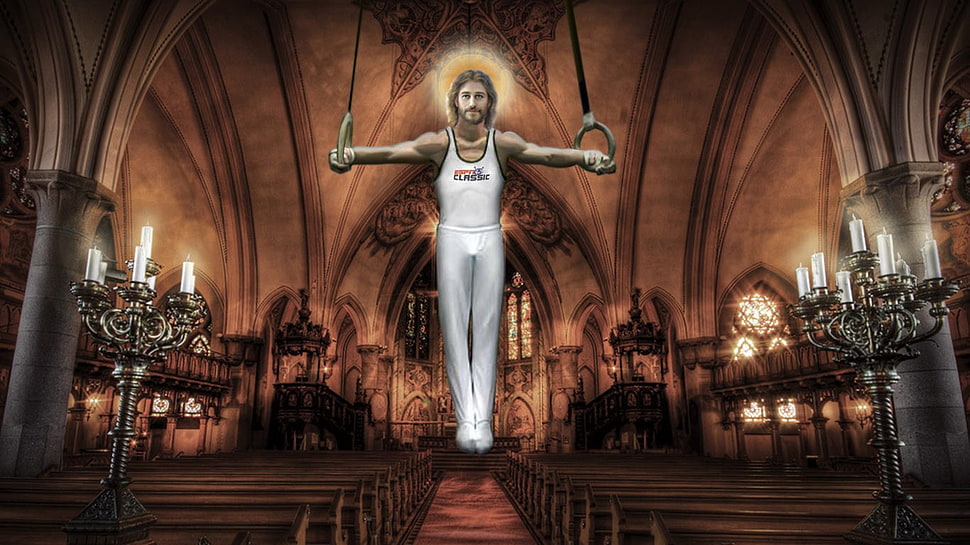
And while as far as I know Jesus did not participate in the Olympics while on Earth, I do think that he would have made a BOMB member of the Men’s Gymnastic Team.  Like maybe on the rings?  I can see it!  Jesus was all about being together with God’s people.  He was part of a team throughout his life.  Yeah, I think Jesus would be pro-Olympics.  

Because … one of the things that makes the Olympics so powerful – so exciting and beloved – is that it invites us into a shared experience; a commonality; a touchstone.  And, Jesus prioritizes that very thing.  Yes, Jesus prioritizes community, and he teaches us the tenets of healthy community like humility, forgiveness, grace, and supporting and helping one another even when we don’t always understand or agree with each other.

The Bible verse from Hebrews is about this wisdom of Jesus.  It’s giving us one little piece of how we live our lives – together. The verse is a short teaching from the Apostle Paul (early founder of the church), and he is helping us to recognize that we are not alone.  As God’s people – as those who learn from the model of Jesus, we are never alone. Paul describes this as

“… a cloud of witnesses who run the race with us.”

In the cloud are people who surround us with love and support; people who cheer us on; people who form our community in life.

And, sometimes we are a witness in someone else’s cloud.

I guess maybe right now, I am in a REALLY big cloud cheering on other people across the world.  In these huge global games called the Olympics.

But everyday, in a much smaller and no less important way, I am called – we are called – to cheer on our community.

And everyday, we have a cloud of witnesses cheering us on and lifting us up.

Breathe deeply and know that you are surrounded by a cloud of witnesses supporting you.

Breathe deeply and know that you are supporting someone else – in their cloud.

#wisdomofJesus #wholenewmeaningofCLOUD